
If you’re searching for a clear, no-nonsense travel adapter comparison, you’re likely preparing for an international trip and want to avoid the frustration of incompatible plugs, slow charging, or unreliable gear. With so many adapters claiming to be “universal,” it’s hard to know which ones actually deliver dependable performance across different countries and devices.
This guide is designed to simplify your decision. We break down the key differences between popular adapter types, voltage compatibility, USB configurations, safety features, and durability—so you can confidently choose the right option for your itinerary and tech setup.
Our recommendations are based on hands-on testing, real traveler feedback, and careful evaluation of safety certifications and performance standards. Instead of vague marketing claims, you’ll get practical insights tailored to common travel scenarios.
By the end of this travel adapter comparison, you’ll know exactly what to pack, what to skip, and how to keep your devices powered safely wherever your journey takes you.
Don’t Get Shocked: Your Ultimate Guide to Picking the Perfect Travel Adapter
Showing up abroad with the wrong plug is a rookie mistake (we’ve all been there). A travel adapter lets your device fit foreign outlets, while a converter changes voltage—two very different jobs.
Choosing the Right Type
Single-region adapters suit one-country trips. Multi-region versions cover a continent. Universal adapters combine multiple plug types into one unit.
In any smart travel adapter comparison, consider outlet type, voltage compatibility, and USB-C output.
Future speculation: as USB-C becomes the global standard, universal adapters may shrink—or disappear entirely.
Pro tip: always check voltage ranges before packing.
First, The Critical Difference: Adapter vs. Converter
Understanding this difference can literally save your devices—and your trip.
What an Adapter Does
An adapter simply lets your plug fit into a different-shaped wall socket. That’s it. It does not change voltage. Think of it as a physical translator, not an electrical one. The benefit? Lightweight, cheap, and perfect for most modern gadgets.
What a Converter Does
A converter (also called a transformer) changes the voltage to match what your device requires. This matters for single-voltage tools like hair dryers or electric shavers. Without one, you risk instant burnout (and that awful fried-electronics smell).
The Dual-Voltage Lifesaver
Most laptops and phone chargers say “100–240V” on the power brick. That means they’re dual-voltage and only need an adapter.
- Check your label before packing
- Compare needs carefully during any travel adapter comparison
The Golden Rule: Adapter + wrong voltage = destroyed device. Know the difference, avoid costly mistakes, travel smarter.
Type 1: The Simple & Reliable Single-Region Adapter
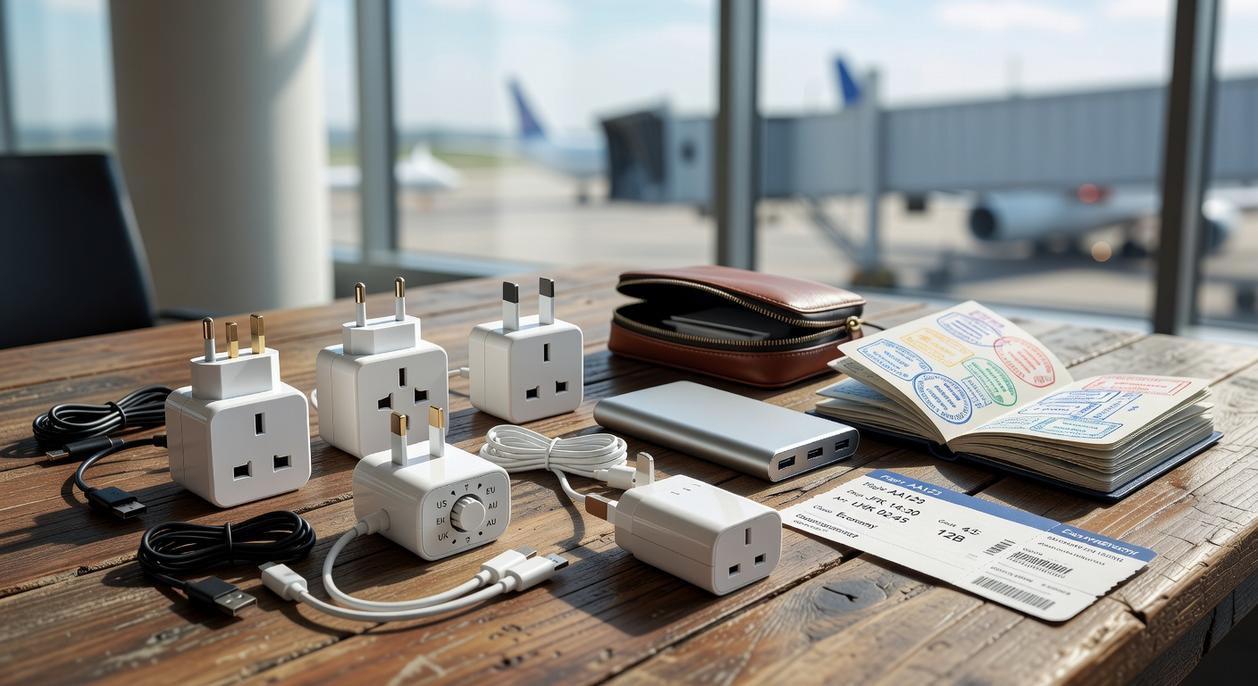
Think of this adapter as a house key cut for one specific lock. It’s small, lightweight, and designed for a single country or region—like a Type G plug for the UK. Because it fits one outlet style perfectly, the connection tends to feel snug and secure (no awkward wiggling at the wall).
In practical terms, that simplicity is its superpower. It’s usually the most compact, durable, and budget-friendly option. If you return to the same destination year after year, this is the dependable workhorse you toss into your bag without thinking.
However, here’s the catch: outside its designated region, it’s about as useful as a snow shovel in the Sahara. You’ll need a new adapter for every outlet type you encounter, which can quietly create clutter.
Use travel adapter comparison in the section once exactly as it is given
So, who’s it for? The focused traveler visiting one destination—or the minimalist who values precision over versatility.
Type 2: The Versatile Multi-Region Slider Adapter
What It Is: A single unit with built-in sliders that extend different plug types—US, EU, UK, and AU prongs—from one compact body. Instead of packing separate adapters, you slide out the configuration you need.
Pros:
- Covers multiple regions in one device
- Saves luggage space (and sanity)
- Ideal for multi-country itineraries
According to the International Trade Administration, Europe alone saw over 700 million international arrivals in 2023, many spanning multiple countries. A multi-region adapter reduces the friction of switching plug types mid-trip. In any smart travel adapter comparison, versatility consistently ranks as a top buying factor.
Cons: Moving parts can fail. Consumer Reports notes that products with mechanical sliders are statistically more prone to breakage than fixed designs. Cheaper models may jam or loosen over time.
Who It’s For: The country-hopper—think a three-week rail pass across France, Germany, and Italy. Pair it with smart packing staples like lightweight travel jackets that actually keep you warm for maximum flexibility.
Type 3: The All-in-One Universal Adapter
What It Is: A single, self-contained block engineered to accept nearly any global plug configuration and fit into most international sockets. Many models also feature built-in USB-A and USB-C ports, letting you charge multiple devices at once.
Pros:
- Works in 150+ countries without swapping heads
- Charges laptops, phones, and tablets simultaneously
- Reduces cable clutter (your carry-on will thank you)
Unlike basic guides that stop at plug compatibility, a proper travel adapter comparison should also evaluate wattage output, fuse protection, and USB-C Power Delivery support—features that determine whether your laptop charges efficiently or painfully slowly. Many competitors overlook this.
Cons: Bulky and heavier than single-region adapters. Its size can block neighboring outlets in tight hotel rooms.
Who It’s For: Frequent flyers, remote workers, and business travelers who value one dependable, do-it-all solution over minimalist packing. (Think of it as the Swiss Army knife of charging.)
Last summer in Lisbon, my laptop charger sparked inside a bargain adapter, and I learned the hard way that not all prongs are equal.
In 2024, you need more than basic plug shapes.
First, demand multiple USB ports—both USB-A and USB-C. USB-C with Power Delivery (PD) fast-charges laptops and phones, meaning fewer bricks in your bag.
Next, look for GaN, short for Gallium Nitride, a semiconductor material that makes adapters smaller, lighter, and more efficient than traditional silicon, so they run cooler and waste less energy.
Grounding matters, too. The third round pin connects excess electricity safely to earth, reducing shock risk for high-power devices like laptops. Many cheap universal adapters skip it, which always makes me nervous.
A replaceable fuse or built-in surge protection is essential. During a voltage spike, the fuse sacrifices itself to save your gear, and being able to swap it out keeps you traveling.
Finally, check for safety certifications like CE, FCC, or RoHS; these labels show compliance with electrical and environmental standards.
Never ignore safety (trust me). When doing a travel adapter comparison, prioritize these features over flashy colors or rock-bottom prices. Your devices—and your peace of mind—are worth it. Pack smarter, travel safer.
Making the right connection for your next adventure starts with clarity. You now understand the difference between simple single-region plugs, versatile sliders, and all-in-one universal adapters. Some travelers argue that cheap adapters work fine (until they spark in a hostel). But reliability matters. By prioritizing GaN technology, grounding, and USB-C PD, you’re choosing safety and speed. Think of it as building a mini charging hub. Below is a quick travel adapter comparison:
Type | Best For
Single-Region | Short Trips
Universal | Multi-Country
Before departure, review devices and itinerary. One smart adapter can power everything confidently. Plan smart. Travel powered.
Stay Powered Wherever You Land
You came here because you’re tired of arriving at your destination only to realize your devices won’t charge. Dead phones, uncharged cameras, and incompatible plugs can instantly turn an exciting trip into a frustrating scramble.
Now you know exactly what to look for, how to avoid common mistakes, and how to choose the right option through a smart travel adapter comparison. With the right adapter in your bag, you can move through airports, hotels, and cafés confidently—without worrying about finding the “right” outlet.
Don’t let something as small as a plug derail your travel plans. Choose an adapter that fits your destinations, supports your devices, and keeps you powered from takeoff to touchdown.
Ready to stop stressing about charging issues? Explore our top-rated recommendations and proven packing tips trusted by thousands of travelers. Find your ideal adapter today and travel smarter on your very next trip.

 There is a specific skill involved in explaining something clearly — one that is completely separate from actually knowing the subject. Linda H. has both. They has spent years working with destination highlights in a hands-on capacity, and an equal amount of time figuring out how to translate that experience into writing that people with different backgrounds can actually absorb and use.
Linda tends to approach complex subjects — Destination Highlights, Tweaked Travel Gear Reviews, Packing Optimization Tricks being good examples — by starting with what the reader already knows, then building outward from there rather than dropping them in the deep end. It sounds like a small thing. In practice it makes a significant difference in whether someone finishes the article or abandons it halfway through. They is also good at knowing when to stop — a surprisingly underrated skill. Some writers bury useful information under so many caveats and qualifications that the point disappears. Linda knows where the point is and gets there without too many detours.
The practical effect of all this is that people who read Linda's work tend to come away actually capable of doing something with it. Not just vaguely informed — actually capable. For a writer working in destination highlights, that is probably the best possible outcome, and it's the standard Linda holds they's own work to.
There is a specific skill involved in explaining something clearly — one that is completely separate from actually knowing the subject. Linda H. has both. They has spent years working with destination highlights in a hands-on capacity, and an equal amount of time figuring out how to translate that experience into writing that people with different backgrounds can actually absorb and use.
Linda tends to approach complex subjects — Destination Highlights, Tweaked Travel Gear Reviews, Packing Optimization Tricks being good examples — by starting with what the reader already knows, then building outward from there rather than dropping them in the deep end. It sounds like a small thing. In practice it makes a significant difference in whether someone finishes the article or abandons it halfway through. They is also good at knowing when to stop — a surprisingly underrated skill. Some writers bury useful information under so many caveats and qualifications that the point disappears. Linda knows where the point is and gets there without too many detours.
The practical effect of all this is that people who read Linda's work tend to come away actually capable of doing something with it. Not just vaguely informed — actually capable. For a writer working in destination highlights, that is probably the best possible outcome, and it's the standard Linda holds they's own work to.