We’ve all been there. Staring at an empty suitcase with no idea how everything’s going to fit. Then there’s the shock of an overweight baggage fee.
Most packing advice is either too vague or overly complex. I’ve spent years on the road, testing every packing method imaginable. Separating the hacks that truly work from the ones that don’t.
You’ve got enough to stress about before a trip. Packing shouldn’t be one of them. This guide promises clear, actionable minimalist packing tips.
It’ll save you space, lighten your load, and banish pre-trip anxiety. Ready to pack smarter?
The Pre-Pack Blueprint: Planning for Effortless Packing
Packing can be a nightmare if you’re drowning in “just in case” items. Why lug around things you won’t use? Instead, think “what will I definitely use?” This mindset shift is your first step to packing like a pro.
Minimalist packing tips? Yes, please.
to the Mix-and-Match Matrix. Imagine choosing just a few colors (two neutrals, one accent) so every top goes with every bottom. This simple palette reduces clutter and ups your style game.
Trust me, it works wonders.
Next, grab a pen. Write down your packing list. It’s a game-changer.
Listing everything prevents overpacking and forgetting essentials. Your chaos turns into calm. It’s like magic, but real.
Now, a step-by-step process. First, check your destination’s weather (seriously, this isn’t optional). Next, list your planned activities (hiking, fancy dinners, beach days).
Based on these, create a tiny capsule wardrobe. The goal? Less clothing, more versatility.
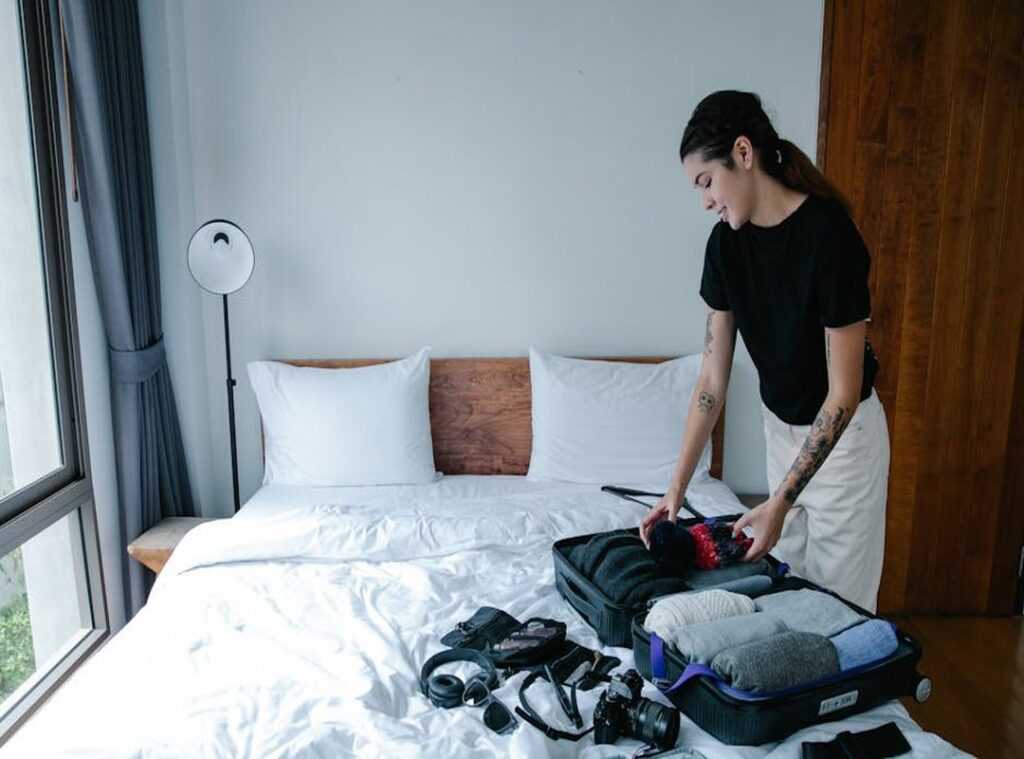
For an extra tip, consider the rolling vs folding packing techniques. Rolling saves space and avoids wrinkles. Folding keeps things neat.
Which plan fits your style? Make it part of your blueprint. Done right, packing becomes an art, not a chore.
Packing Like a Pro: Roll or Fold?
Ah, the age-old debate: rolling vs. folding. I think the best answer might surprise you. It’s both.
Rolling is great for soft, wrinkle-resistant items. T-shirts, knitwear, even jeans. They all love to be rolled.
Why limit yourself when you can have the best of two worlds? Each method has its strengths. Let’s talk about them.
But here’s the trick: roll tightly. Ever heard of the Ranger Roll? It’s a military technique.
You start by folding the bottom hem inside out to make a pocket. Tuck in the sleeves, roll it up tight, and finish by flipping the pocket over the roll. Boom.
Minimalist packing tips don’t come better than that.
But folding has its place, too. Especially for structured items that crease easily. Your blazers, dress pants, button-down shirts.
These need a gentler touch. Try ‘file folding.’ It’s brilliant. Stand your folded items vertically in the suitcase.
You’ll see everything in a glance. No more rifling through piles to find that one shirt you love.
And if you’re feeling adventurous, there’s an advanced method: bundling. Wrap your clothes around a core (try a small pouch) to keep wrinkles at bay. It’s like wrapping a present.
A wrinkle-free, fast present.
To sum it up: Roll your T-shirts and jeans. Fold the blazers and shirts. Bundle if you’re daring.
Why choose when you can be strategic? Packing smartly saves space, it saves sanity. That’s the real win.
Master the Packing Cube Game: Travel Like a Pro
Packing cubes are not just some passing trend. They’re important (and yes, boldly non-negotiable) for anyone aiming to stay organized and save space. I used to think they were just gimmicks until I found myself digging through a suitcase at 2 a.m. looking for a toothbrush.
Sound familiar?
The genius of packing cubes lies in their ability to create modular “drawers” within your luggage. No more dumping everything out to find that one sock. It’s like having a tidy dresser on the go.
So how do you use these cubes effectively? Start by organizing by clothing category: tops in one cube, bottoms in another. Easy, right?
Alternatively, go by outfit or activity. A separate cube for gym gear and another for evening wear.
But don’t just grab any cubes off the rack. There’s a difference between standard and compression cubes. Compression cubes (the ones with the extra zipper) are perfect for bulky sweaters and jackets.
Just don’t use them for delicate fabrics unless you want wrinkles everywhere.
When choosing your set, opt for a mix of sizes. A versatile mix of small, medium, and large cubes beats a uniform set hands down. You’ll thank me later when you’re not wrestling with an overstuffed bag.
And if you’re serious about maximizing space carry on bag, remember this: the minimalist packing tips you adopt today could be your travel salvation tomorrow.
Travel Light: Mastering One-Bag Adventures
One-bag travel is not just a trend. It’s a lifestyle choice. Imagine skipping baggage claim and breezing through city streets without the burden of hefty luggage.

Feels liberating, right? You can get through cobblestones, hop on public transit, and avoid those sneaky airline fees that eat into your travel budget. Less stuff means fewer decisions.
You’re not just packing light; you’re packing smart.
The secret to this minimalist method? Multi-purpose items. Picture this: a sarong that doubles as a scarf and a beach towel.
Or convertible hiking pants that transform into shorts. Genius. Keep it simple with a single, dark pair of trousers that works for both casual outings and fancy dinners.
You don’t need a closet on your back.
High-performance fabrics are your best friends here. Materials like merino wool are travel gold. They’re temperature-regulating, odor-resistant, and lightweight.
Perfect for unpredictable weather and tight packing spaces. No more bulky sweaters or multiple layers. Just one versatile piece.
Planning to do a small load of laundry during your trip is a game-changer. Seriously, a couple of washes cuts your clothing needs in half. Who needs a full wardrobe anyway?
You’re there to explore, not to host a fashion show.
To get you started, here’s a minimalist packing and travel tips guide. Visualize a European city break with just one bag. This plan is about freedom and focus.
It’s about seeing more and worrying less. Embrace the simplicity. It’s worth it.
Smart Solutions for Toiletries and Tech
Traveling light is an art. It’s all about smart choices. Take toiletries: ditch those liquid shampoos.
Shampoo bars and toothpaste tabs are game-changers. They skip liquid restrictions, prevent spills, and save a bunch of space. Ever had a conditioner explode in your bag?
Yeah, not fun. Solid options save the day.
Decanting is another trick. Pour liquids into small, reusable silicone bottles. Forget those overpriced travel-sized products.
Seriously, who needs them?
Now, let’s talk cables. Tangled messes are the worst. A dedicated electronics organizer (or tech pouch) is your new best friend.
Pop all your chargers, cables, power banks, and adapters in one place. It’s a minimalist packing tip that saves you from chaos.
And while you’re at it, invest in a multi-port GaN charger. One device for your phone, laptop, and watch. No more bulky charging bricks.
Travel smarter, not harder. This is the way to pack.
Stress-Free Packing Awaits
Packing used to be stressful, right? But it doesn’t have to be. Shift your mindset.
With minimalist packing tips, like rolling clothes or using packing cubes, it’s almost fun. Why not try one of these on your next trip? You’ll be surprised how easy it gets.
No more stuffing suitcases last minute. Start planning now, and see the difference it makes. Dive into the world of stress-free travel.
Enjoy the ride. Ready to pack like a pro?

 Ask Zyphara Ollvain how they got into hidden gems and you'll probably get a longer answer than you expected. The short version: Zyphara started doing it, got genuinely hooked, and at some point realized they had accumulated enough hard-won knowledge that it would be a waste not to share it. So they started writing.
What makes Zyphara worth reading is that they skips the obvious stuff. Nobody needs another surface-level take on Hidden Gems, Flight Hacks and Booking Strategies, Packing Optimization Tricks. What readers actually want is the nuance — the part that only becomes clear after you've made a few mistakes and figured out why. That's the territory Zyphara operates in. The writing is direct, occasionally blunt, and always built around what's actually true rather than what sounds good in an article. They has little patience for filler, which means they's pieces tend to be denser with real information than the average post on the same subject.
Zyphara doesn't write to impress anyone. They writes because they has things to say that they genuinely thinks people should hear. That motivation — basic as it sounds — produces something noticeably different from content written for clicks or word count. Readers pick up on it. The comments on Zyphara's work tend to reflect that.
Ask Zyphara Ollvain how they got into hidden gems and you'll probably get a longer answer than you expected. The short version: Zyphara started doing it, got genuinely hooked, and at some point realized they had accumulated enough hard-won knowledge that it would be a waste not to share it. So they started writing.
What makes Zyphara worth reading is that they skips the obvious stuff. Nobody needs another surface-level take on Hidden Gems, Flight Hacks and Booking Strategies, Packing Optimization Tricks. What readers actually want is the nuance — the part that only becomes clear after you've made a few mistakes and figured out why. That's the territory Zyphara operates in. The writing is direct, occasionally blunt, and always built around what's actually true rather than what sounds good in an article. They has little patience for filler, which means they's pieces tend to be denser with real information than the average post on the same subject.
Zyphara doesn't write to impress anyone. They writes because they has things to say that they genuinely thinks people should hear. That motivation — basic as it sounds — produces something noticeably different from content written for clicks or word count. Readers pick up on it. The comments on Zyphara's work tend to reflect that.