Ever stand at the baggage carousel, stressed and tired, wondering why your suitcase feels like it’s filled with bricks? You’re not alone. The surprise of oversized bag fees can ruin any trip.
I’ve been there. I’ve spent years traveling, testing every packing method imaginable. I know what works and what doesn’t.
This guide is your key to travel freedom. You’ll learn how to maximize carry-on space like a pro. I’ll share what took me years to figure out: a proven system to improve your carry-on capacity.
No more leaving essentials behind. Anyone can master these techniques. You’ll travel lighter and smarter.
Trust me, I’ve done the research. Stick with me, and you’ll have everything you need in one bag without the stress.
The One-Bag Mindset: It’s About What You Leave Behind
Maximizing carry-on space is about embracing minimalism. Forget clever folding. It’s about deciding what stays home.
You know, ditching the “just in case” items. The “rule of three” is your new best friend. Pick versatile pieces.
One pair of dark jeans? They take you from day to night effortlessly.
Think about the worst-case scenario. So what if you leave your umbrella behind? You can always buy a cheap one.
It’s better than lugging around what you might never use. Multi-purpose items are key. A sarong that doubles as a towel or a shampoo bar for hair and body.
Traveling light gives you freedom. Imagine strolling through the airport, unfazed by baggage claim chaos. It’s liberating.
Ready to change how you pack? Pack Like Minimalist Traveler. This isn’t just about packing. It’s a mindset.
Feel the weight drop (not) just from your bag, but from your mind.
One that focuses on what you gain by letting go. Who knew leaving things behind could feel so good?
Beyond the Basics: Advanced Rolling and Folding Techniques
You’ve probably heard the old advice to roll your clothes to save space. But let’s take it up a notch. Enter the Ranger Roll technique.
It’s like the of packing (okay, I couldn’t resist). Start with a t-shirt: lay it flat, fold the bottom two inches inside out to create a cuff, fold the sides in, and roll from top to bottom. Tuck the roll into the cuff.
Voilà! A neat little bundle. This works wonders for pants too.
But when should you fold instead of roll? Some clothes just scream to be folded. Button-downs or blazers, for instance.
These items wrinkle if you so much as look at them wrong. Try interfolding or bundle wrapping. Lay one item flat, place another on top, and fold them together.
Now, the pros and cons:
- Cotton rolls well but can wrinkle.
- Wool is best folded to avoid creases.
Pro tip: use your bag’s natural structure. Roll items at the bottom to create a base, then lay folded items on top. This helps maximize carry-on space.
I learned these tricks the hard way. Picture me with a suitcase that wouldn’t close, sitting on it like an old cartoon gag. But now, I pack like a pro.
You can too. Ready to roll? Or fold?
Secret Weapon for Travel: Compression Sacks and Smart Organizers
You know what really grinds my gears? When people talk about packing like it’s some unsolvable puzzle. If you want to maximize carry-on space, here’s your go-to: compression sacks and smart organizers.
These are your secret weapon.
Now, let’s talk packing cubes. You might think you’ve heard it all before, but trust me, there’s a difference between standard and compression packing cubes. Standard cubes tidy up your suitcase, making it look neat but not saving much space.
Compression cubes, though, are the real MVPs. They come with an extra zipper (yes, an extra one) that squeezes out the air, shrinking your bulky sweaters and jackets to half their size. It’s like magic, but without the wand.
Still skeptical? Let me throw some real-life scenarios your way. Use compression cubes for the heavy hitters like your winter gear.
For the smaller stuff (socks,) underwear. Stick to regular cubes. And if you’re wondering if packing cubes game changer overhyped, I say they’re the real deal.
But don’t stop there. Your toiletries are hogging space too. Switch to solid toiletries like shampoo bars, conditioner bars, and toothpaste tabs.
They’re compact, leak-proof, and an easy win. Need liquid options? Try leak-proof silicone travel bottles like GoToob.
Yes, they’re worth it.
Lastly, sneak in a small daypack in your carry-on. It takes up almost no space and becomes a lifesaver on day trips. Don’t overlook it.
Real space-savers aren’t about spending more; it’s about thinking smarter. So, are you ready to pack like a pro?
The Digital Carry-On: Offload Weight to the Cloud
Why lug around paper when you can carry your essentials in the cloud? The heaviest items are often non-physical. Think about it: your documents, books, and maps.
Keep a copy on your phone too (because, you know, Wi-Fi can be iffy).
By digitizing these, you can maximize carry-on space without sacrificing what you need. Scan your passport, tickets, and hotel confirmations. Save them on Google Drive or Dropbox.
Books? Download e-books to a Kindle or use your phone. Magazines are history with apps like Libby.
Borrow them from a library and read on the go. And who needs paper maps? Download offline maps on Google Maps.
It’s modern. It’s clever. It’s like packing without packing.
If you’re curious about more ways to maximize carry-on space, there are guides to help you. Pro tip: Always have a backup plan. Digital can fail, but it’s rare.
Pack Smart: A 7-Day Carry-On Challenge
Traveling light can feel like a puzzle, right? But there’s something so liberating about fitting everything you need into a carry-on. For a 7-day trip to a moderate climate (say, a European city in spring), here’s how I do it.
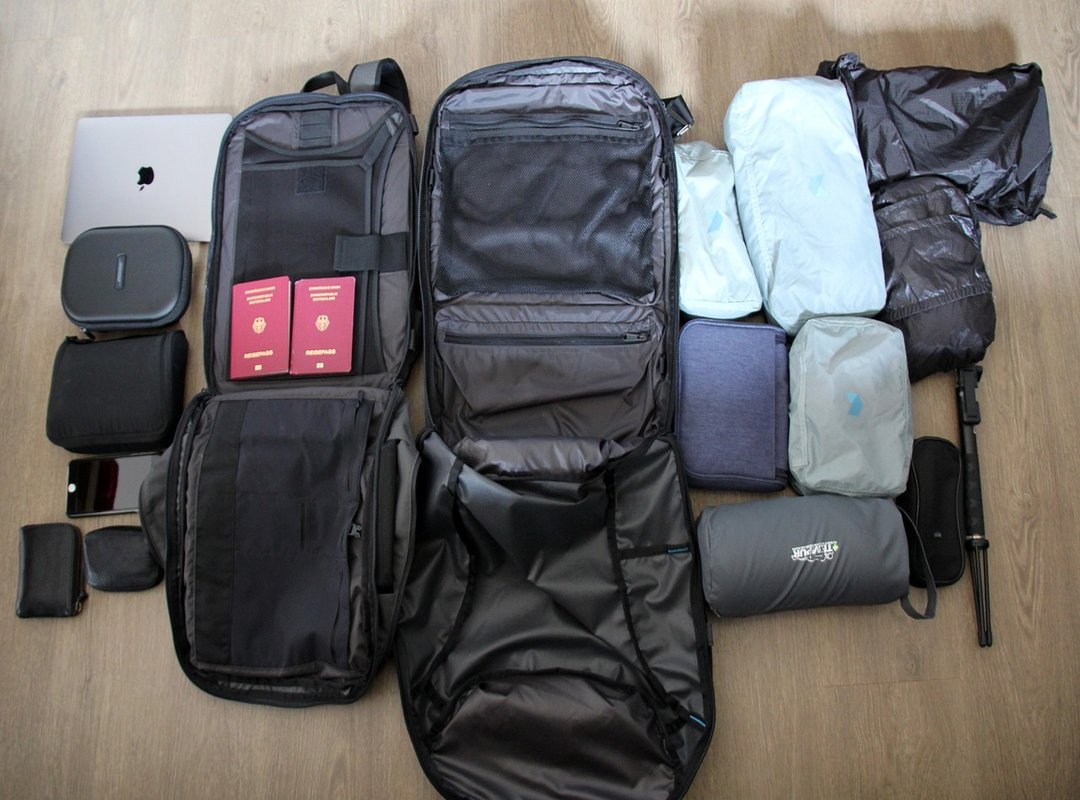
Start with clothes. Four versatile shirts, two pairs of pants, and one cozy sweater. I roll my jeans and place them at the bottom of the bag.
The key is to maximize carry-on space. I then use a large compression cube for the sweater and shirts. It might sound like overkill, but trust me, it works.
Socks and underwear go into a smaller cube. They fill up the corners beautifully.
What about shoes? Wear your bulkiest pair (boots, anyone?) on the plane. Same goes for your jacket and heavy layers.
Now, let’s talk toiletries and gadgets. Keep them minimal. A toothbrush, travel-sized toothpaste, and maybe a phone charger.
You get to save precious space and stay warm during the flight. Plus, who doesn’t love a smart packing hack?
All these slide into the side pockets.
Here’s the kicker: there’s still room left for a souvenir or two. A small trinket or a local snack. Something to remind you of your journey.
Packing this way might take a bit of practice, but once you’ve got it down, it’s a game-changer. Have you tried it?
Travel Light, Travel Right
Travel smarter and avoid the hassle of checked bags. Who enjoys fees or waiting at the carousel? Nobody.
This isn’t about magic tricks but smart decisions. You blend a minimalist mindset with real techniques and modern gear. It’s time to maximize carry-on space and feel the freedom of one bag travel.
Think about it: less stress, more adventure. Isn’t that the dream? Start planning your next trip with these tips.
Feel the difference when you ditch the bulky luggage. Ready to change the way you travel? Dive in and experience the joy of packing light.
You won’t regret it.

 Jason L. has opinions about flight hacks and booking strategies. Informed ones, backed by real experience — but opinions nonetheless, and they doesn't try to disguise them as neutral observation. They thinks a lot of what gets written about Flight Hacks and Booking Strategies, Tweaked Travel Gear Reviews, Packing Optimization Tricks is either too cautious to be useful or too confident to be credible, and they's work tends to sit deliberately in the space between those two failure modes.
Reading Jason's pieces, you get the sense of someone who has thought about this stuff seriously and arrived at actual conclusions — not just collected a range of perspectives and declined to pick one. That can be uncomfortable when they lands on something you disagree with. It's also why the writing is worth engaging with. Jason isn't interested in telling people what they want to hear. They is interested in telling them what they actually thinks, with enough reasoning behind it that you can push back if you want to. That kind of intellectual honesty is rarer than it should be.
What Jason is best at is the moment when a familiar topic reveals something unexpected — when the conventional wisdom turns out to be slightly off, or when a small shift in framing changes everything. They finds those moments consistently, which is why they's work tends to generate real discussion rather than just passive agreement.
Jason L. has opinions about flight hacks and booking strategies. Informed ones, backed by real experience — but opinions nonetheless, and they doesn't try to disguise them as neutral observation. They thinks a lot of what gets written about Flight Hacks and Booking Strategies, Tweaked Travel Gear Reviews, Packing Optimization Tricks is either too cautious to be useful or too confident to be credible, and they's work tends to sit deliberately in the space between those two failure modes.
Reading Jason's pieces, you get the sense of someone who has thought about this stuff seriously and arrived at actual conclusions — not just collected a range of perspectives and declined to pick one. That can be uncomfortable when they lands on something you disagree with. It's also why the writing is worth engaging with. Jason isn't interested in telling people what they want to hear. They is interested in telling them what they actually thinks, with enough reasoning behind it that you can push back if you want to. That kind of intellectual honesty is rarer than it should be.
What Jason is best at is the moment when a familiar topic reveals something unexpected — when the conventional wisdom turns out to be slightly off, or when a small shift in framing changes everything. They finds those moments consistently, which is why they's work tends to generate real discussion rather than just passive agreement.