
Choosing between carry-on vs checked luggage can make or break the start of your trip. Pick the wrong option, and you could face unexpected baggage fees, confiscated items at security, or the frustration of waiting at baggage claim after a long flight. This guide breaks down the essential differences in a clear, side-by-side comparison—covering costs, airline size limits, packing restrictions, and overall convenience. Drawing on years of hands-on travel experience and practical flight insights, we’ll help you understand what works best for short getaways, long-haul trips, and everything in between so you can travel smarter, lighter, and stress-free.
At a Glance: The Fundamental Role of Each Bag Type
When travelers debate carry-on vs checked luggage, they’re usually confused about function, not just size. So let’s simplify it.
First, carry-on luggage is the bag that stays with you in the aircraft cabin. It fits in the overhead bin or under the seat. Because it never leaves your sight, its primary purpose is protecting essentials—think medications, passports, electronics, and a fresh change of clothes in case of delays. In other words, it’s your “don’t let this out of my hands” bag (and yes, we’ve all clutched it during turbulence).
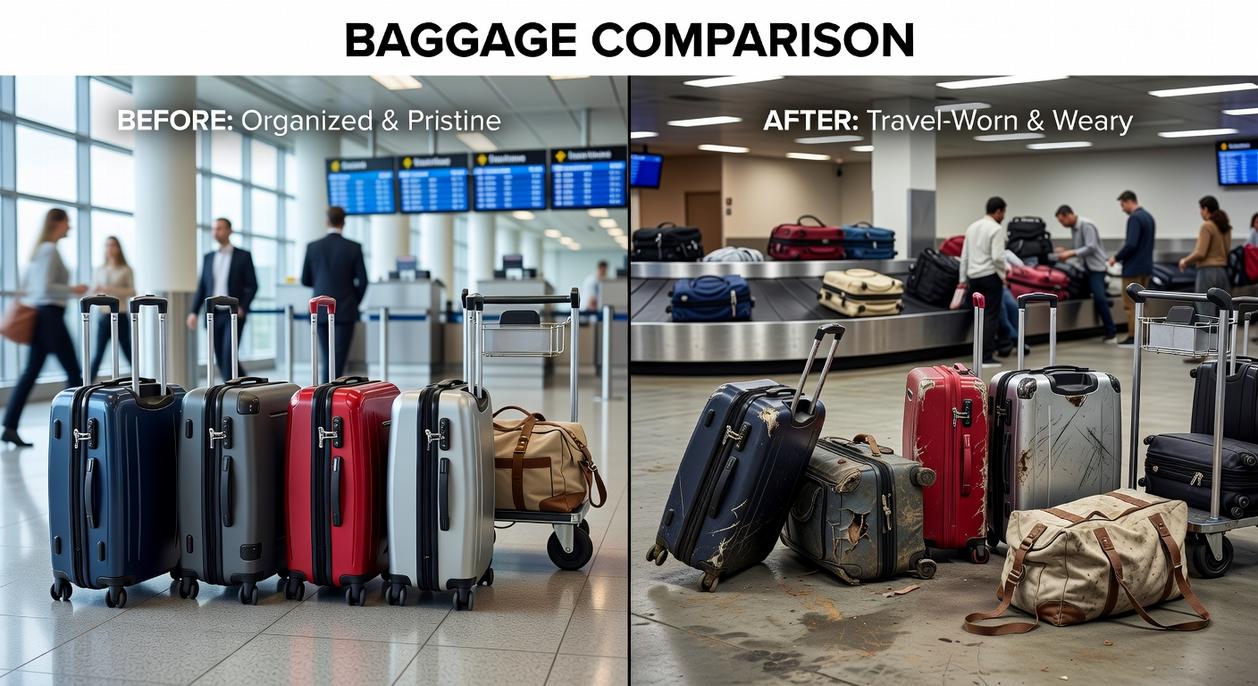
Meanwhile, checked luggage is handed to the airline at check-in and stored in the cargo hold. You retrieve it at baggage claim after landing. This bag handles bulk: full wardrobes, shoes, and liquids over 3.4 oz (100 ml), which aviation security rules restrict in cabins (per TSA guidelines).
So, put simply: cabin equals essentials; cargo hold equals capacity. Understanding that distinction makes packing decisions far less stressful.
Size & Weight Restrictions: Avoiding Costly Gate-Check Surprises
Airlines don’t play around with baggage rules. And if you’ve ever watched someone frantically reshuffle socks at the gate, you know why this matters.
Carry-On Dimensions
Most domestic airlines cap carry-ons at 22 x 14 x 9 inches (56 x 36 x 23 cm). International carriers often allow less. Weight limits typically range from 15–22 lbs (7–10 kg), though some airlines actually weigh them (yes, even your “light” backpack).
Pro Tip: Check your airline’s website the night before departure. Policies change, and budget carriers are famously strict.
Checked Luggage Dimensions
Standard checked bags must stay within 62 linear inches (length + width + height) and under 50 lbs (23 kg) for economy.
Here’s a simple pre-flight system:
- Measure your suitcase with a tape measure.
- Weigh it using a luggage scale (they’re inexpensive and save money long term).
- Remove heavy items like shoes or books if you’re close to the limit.
Oversize and overweight fees can exceed $100 per bag. That’s often more than the ticket upgrade you considered skipping.
When deciding between carry-on vs checked luggage, factor in both size rules and your airline’s enforcement habits. A few minutes of prep at home beats a public repacking scene at Gate 34 every time.
The Cost Breakdown: What You’ll Actually Pay to Fly With Your Bags
I learned this lesson the hard way on a quick trip to Denver. I booked the cheapest Basic Economy ticket I could find (felt like I’d “won” the internet), only to discover at checkout that bringing a full-size carry-on would cost extra. Suddenly, my budget fare wasn’t such a bargain.
First, let’s define the basics. A checked bag is luggage stored in the plane’s cargo hold. A carry-on goes in the overhead bin, while a personal item (like a backpack or purse) fits under the seat.
Checked bag fees are rarely free on domestic economy flights. Expect $30–$40 for the first bag, more for the second—especially if you don’t prepay online. Meanwhile, many major airlines now charge for overhead-bin bags on Basic Economy fares.
Here’s where the carry-on vs checked luggage debate gets real. Sometimes paying $35 to check a bag is cheaper than upgrading your fare just to bring a roller onboard. Do the math before you click “confirm.”
That said, packing light has hidden savings. Skipping baggage claim once saved me 40 minutes and a near-missed connection. Plus, there’s zero risk of lost luggage.
If you’re downsizing, check out top travel backpacks for digital nomads reviewed to make every inch count.
Packing Rules: What Can and Cannot Go in Each Bag
Most travelers know the basics. Fewer understand why the rules exist—and that’s where costly mistakes happen.
Let’s start with your carry-on. Electronics with lithium-ion batteries—laptops, cameras, power banks—MUST stay with you. Airlines require this because lithium-ion batteries can overheat and pose fire risks in cargo holds (FAA guidance). Keeping them in the cabin allows crews to respond quickly if something goes wrong. The same logic applies to medications, jewelry, and critical documents. If losing it would ruin your trip, it belongs in your carry-on. Simple.
Now, the 3-1-1 rule. Liquids, gels, aerosols, creams, and pastes must be 3.4 ounces (100 ml) or less, inside ONE clear quart-sized zip-top bag. Yes, toothpaste counts. (Yes, even if it’s “almost empty.”) The TSA enforces this to speed screening and reduce liquid threat risks.
Here’s where many guides stop—but here’s what they miss about carry-on vs checked luggage: pressure changes and baggage handling matter. Full-sized toiletries are fine in checked bags, but seal them in leak-proof pouches. Temperature shifts can cause bottles to burst mid-flight.
Sharp objects—like safety razors (non-disposable) and pocket knives—must go in checked luggage. Prohibited everywhere? Explosives, flammable liquids, hazardous chemicals. No exceptions.
• Pro tip: Take photos of expensive items before packing checked luggage for insurance claims.
• Place a tracker inside checked bags for real-time peace of mind.
Some argue these rules are excessive. But they exist for SAFETY and efficiency. Understanding the reasoning gives you an edge—and fewer awkward moments at security.
Choosing luggage shouldn’t feel like solving a mystery novel. This guide covered size, cost, contents, and convenience, because balancing packing needs with airline rules is the real plot twist. However, the smartest move comes down to three steps:
- Lay out everything you plan to bring.
- Check airline limits before you get emotionally attached to that third pair of shoes.
- Compare fees and flexibility in the classic carry-on vs checked luggage debate.
Afterward, decide whether speed at security or stress-free space matters more. In other words, pack smart, dodge surprise fees, and make the airport your runway. Confidently.
Make the Right Luggage Choice for Your Next Trip
You came here trying to decide between carry-on vs checked luggage, and now you know exactly how each option impacts your time, budget, flexibility, and stress levels. Whether you’re trying to avoid baggage fees, skip long airport waits, or pack everything you need without restrictions, the right choice can make or break your travel experience.
The real pain point isn’t just luggage — it’s wasted time, surprise costs, and unnecessary travel headaches. Choosing wrong can mean missed connections, lost bags, or hauling more than you actually need.
Now it’s your move. Before your next flight, review your trip length, airline rules, and packing priorities — then commit to the option that supports a smoother journey. For more smart travel hacks, packing strategies, and insider tips that help you travel lighter and stress less, explore our expert guides and start planning like a pro today.

 As co-founder of Pax Travel Tweaks, Zyphara Ollvain brings a forward-thinking approach to travel content by blending innovation with real-world travel advice. She focuses on emerging travel technologies, digital nomad resources, and modern travel trends that shape how people explore today. Zyphara’s goal is to empower readers with knowledge that makes travel smoother, smarter, and more enjoyable.