Planning a trip to Marrakech and wondering which landmarks are truly worth your time? This guide to marrakech cultural sites is designed to help you cut through the noise and focus on the places that genuinely capture the city’s history, artistry, and living traditions. From centuries-old palaces and intricate madrasas to vibrant souks and serene gardens, we break down what makes each site significant—and how to experience it without feeling overwhelmed.
Travelers often struggle to prioritize in a city layered with history at every turn. That’s why this article highlights must-see attractions, explains their cultural context, and shares practical tips to make your visit smoother and more meaningful.
To ensure accuracy and depth, we’ve cross-referenced historical sources, local heritage materials, and on-the-ground travel insights. The result is a clear, trustworthy overview that helps you explore Marrakech with confidence and cultural awareness.
A Journey Through the Heart of the Red City
Marrakech overwhelmed me at first. I rushed through souks, chasing photos, and skipped the palaces that tell the story. Big mistake. The real magic of marrakech cultural sites lives in courtyards and tiled riads.
Here’s what I learned:
- Start with Bahia Palace to understand royal ambition and artistry.
- Pause in Majorelle Garden early, before buses arrive.
- Enter the Saadian Tombs with a guide (context changes everything).
Some argue wandering aimlessly is more “authentic.” I disagree. Intention transforms chaos into meaning. Slow down. Look up. Let Red City speak.
The Pulse of the Medina: Jemaa el-Fnaa and the Labyrinthine Souks
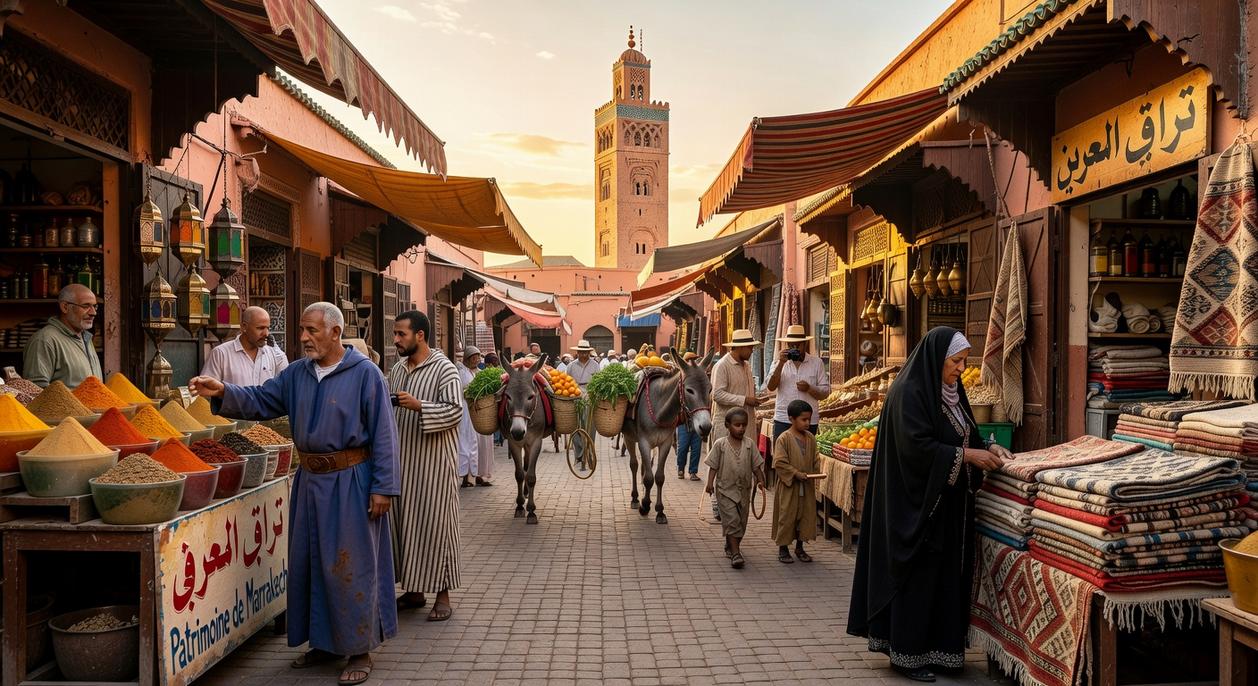
By day, Jemaa el-Fnaa hums with hypnotic rhythm. Snake charmers sway to flutes, henna artists beckon, and storytellers (known locally as hlaykia) gather tight circles of listeners. Come sunset, however, the square transforms. Smoke rises from grill carts, lanterns flicker on, and the air fills with cumin and sizzling lamb. It’s less a market and more a nightly ritual—equal parts theater and dinner service.
To experience both personalities, timing matters. Arrive mid-morning for photos and fewer crowds. Then return after 7 p.m., when food stalls dominate. For perspective, slip into a rooftop café along the square’s edge and order mint tea (called atay). From above, the scene unfolds like live cinema.
From the square, arteries of the souks branch outward. Souk Semmarine draws shoppers with leather babouches and pierced brass lanterns. Meanwhile, Souk Haddadine rings with the metallic rhythm of blacksmiths shaping hinges and lamps. The deeper you wander, the narrower the alleys become (yes, Google Maps will surrender).
| Souk Area | Known For | What to Notice |
|---|---|---|
| Souk Semmarine | Leather, lanterns |
Hand-stitching details |
| Souk Haddadine | Ironwork, metal lamps | Hammered textures |
For quieter discoveries, look for signs pointing to Fondouks—historic caravanserais once housing traders. Inside these courtyards, artisans carve cedar or weave textiles away from main tourist flows. These lesser-known marrakech cultural sites reward patience and curiosity. In other words, slow down—the medina reveals itself gradually.
Echoes of Royalty: Exploring Marrakech’s Grand Palaces
Marrakech doesn’t whisper its history—it stages it dramatically. And nowhere is that clearer than in Bahia Palace and El Badi Palace, two icons among marrakech cultural sites that couldn’t feel more different.
Bahia Palace – The Brilliant
First, Bahia Palace. Built in the late 19th century as the lavish residence of Grand Vizier Si Moussa and later expanded by his son Ba Ahmed, it was designed to be the greatest palace of its time (subtle was not the brief). The intricate zellij—a traditional Moroccan geometric tilework made from individually cut ceramic pieces—shimmers along the walls. Look up and you’ll see carved cedarwood ceilings, their patterns so detailed they almost feel embroidered.
Then there are the courtyards: orange trees, marble fountains, filtered light. It’s peaceful in a way that makes you instinctively lower your voice.
Practical tip: Go right when it opens. Tour groups arrive mid-morning, and the early light makes the tiles glow—ideal for photos and for actually hearing the fountains.
Some argue Bahia feels “too restored” or curated. I disagree. Its polish helps you imagine the vizier’s life in full color rather than as a faded relic.
El Badi Palace – The Incomparable Ruin
In contrast, El Badi is a 16th-century Saadian statement of ambition. Today, it stands roofless and vast—sunken gardens, towering walls, and resident storks perched like silent guardians. Climb to the rooftop terrace for sweeping Atlas Mountain views.
Yes, it’s mostly ruins. But that emptiness? It’s the point. You feel the scale more intensely without distraction.
If you love atmospheric coastal history, you might also enjoy the best coastal towns in portugal for a relaxing escape—different vibe, same sense of timeless grandeur.
Sanctuaries of Spirit and Knowledge
The Koutoubia Mosque isn’t just a landmark—it’s the skyline of Marrakech. Its 12th-century minaret rises above the city like a compass needle pointing heavenward, guiding both worshippers and wanderers. As the spiritual heart of the city, it remains an active place of prayer, which means non-Muslims cannot enter. Some travelers grumble about that restriction. I don’t. Sacred spaces deserve boundaries. Besides, the exterior’s geometric stonework and the surrounding gardens offer more than enough beauty to absorb (especially at sunset, when the walls blush rose-gold).
If Koutoubia is the soul, the Ben Youssef Medersa is the intellect. This former Islamic college showcases Hispano-Moresque architecture at its finest—zellige tiles, carved cedar, and stucco lacework that feels impossibly precise. The central courtyard’s reflective pool mirrors the sky, while the tiny student dorm rooms upstairs remind you that great scholarship often begins in humble quarters. Walking through, I couldn’t help but think of it as the Hogwarts of marrakech cultural sites—minus the moving staircases.
Then there are the Saadian Tombs, hidden for centuries and rediscovered in 1917. The Hall of the Twelve Columns, where Saadian rulers rest beneath Italian marble and gilded ceilings, is breathtaking. Some say it’s overrated. I’d argue reverence never goes out of style.
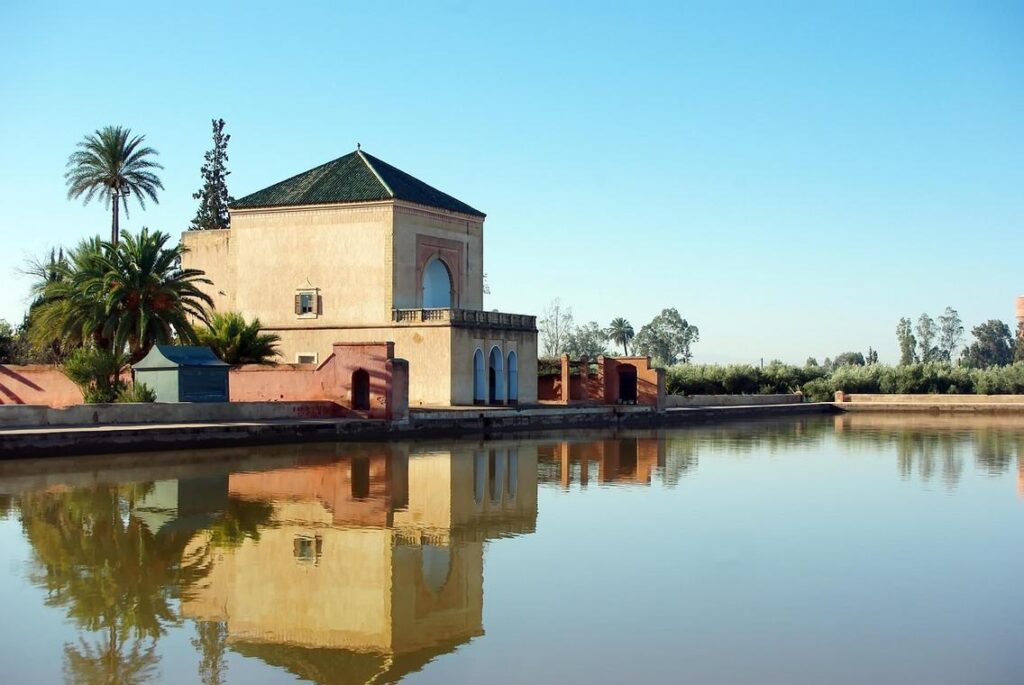
Jardin Majorelle and Le Jardin Secret offer two distinct escapes within marrakech cultural sites.
Jardin Majorelle is the showstopper: a cobalt-blue villa glowing against bamboo and cacti, once rescued by Yves Saint Laurent. The exotic plant collection feels almost cinematic (think a Wes Anderson color palette), and the on-site museum adds fashion history to the stroll. But popularity has a price—lines can snake around the block. Booking Hack: reserve tickets online 24–48 hours ahead to skip the wait. Pro tip: choose the first morning slot for softer light and thinner crowds.
Le Jardin Secret, by contrast, is a whisper. Designed around traditional Islamic garden principles—symmetry, water channels, a central pavilion—it offers shade and stillness steps from the chaotic souks. If Majorelle is spectacle, this is sanctuary.
Which should you choose? Crave iconic photos and fashion lore? Pick Majorelle. Need quiet reflection and architectural harmony? Le Jardin Secret wins. Both enchant.
From the buzzing souks (markets packed with spice stalls and storytellers) to tranquil riads and gardens, you’ve traced Marrakech’s rhythm. This guide simplifies marrakech cultural sites into clear steps:
- Start central
- Wander outward
- Pause often
Use it, then get gloriously lost—the Red City rewards curiosity bravely, intentionally.
Make the Most of Marrakech Before You Go
You came here looking for clarity on the best marrakech cultural sites to visit—and now you have a focused roadmap to explore the city with confidence. From historic palaces to vibrant souks and architectural landmarks, you’re no longer guessing what’s worth your time.
Travel overwhelm is real. Too many options, not enough time, and the fear of missing something unforgettable can turn excitement into stress. With the right plan, though, Marrakech becomes immersive instead of intimidating.
Now it’s time to act. Map out your must-see spots, book key tickets in advance, and organize your days by neighborhood to avoid backtracking. Want even smarter travel strategies, flight hacks, and curated hidden gems? Explore our expert travel guides and start planning like a pro. Thousands of savvy travelers already use our tips to simplify their trips—join them and turn your Marrakech adventure into a seamless, unforgettable experience.

 There is a specific skill involved in explaining something clearly — one that is completely separate from actually knowing the subject. Linda H. has both. They has spent years working with destination highlights in a hands-on capacity, and an equal amount of time figuring out how to translate that experience into writing that people with different backgrounds can actually absorb and use.
Linda tends to approach complex subjects — Destination Highlights, Tweaked Travel Gear Reviews, Packing Optimization Tricks being good examples — by starting with what the reader already knows, then building outward from there rather than dropping them in the deep end. It sounds like a small thing. In practice it makes a significant difference in whether someone finishes the article or abandons it halfway through. They is also good at knowing when to stop — a surprisingly underrated skill. Some writers bury useful information under so many caveats and qualifications that the point disappears. Linda knows where the point is and gets there without too many detours.
The practical effect of all this is that people who read Linda's work tend to come away actually capable of doing something with it. Not just vaguely informed — actually capable. For a writer working in destination highlights, that is probably the best possible outcome, and it's the standard Linda holds they's own work to.
There is a specific skill involved in explaining something clearly — one that is completely separate from actually knowing the subject. Linda H. has both. They has spent years working with destination highlights in a hands-on capacity, and an equal amount of time figuring out how to translate that experience into writing that people with different backgrounds can actually absorb and use.
Linda tends to approach complex subjects — Destination Highlights, Tweaked Travel Gear Reviews, Packing Optimization Tricks being good examples — by starting with what the reader already knows, then building outward from there rather than dropping them in the deep end. It sounds like a small thing. In practice it makes a significant difference in whether someone finishes the article or abandons it halfway through. They is also good at knowing when to stop — a surprisingly underrated skill. Some writers bury useful information under so many caveats and qualifications that the point disappears. Linda knows where the point is and gets there without too many detours.
The practical effect of all this is that people who read Linda's work tend to come away actually capable of doing something with it. Not just vaguely informed — actually capable. For a writer working in destination highlights, that is probably the best possible outcome, and it's the standard Linda holds they's own work to.