
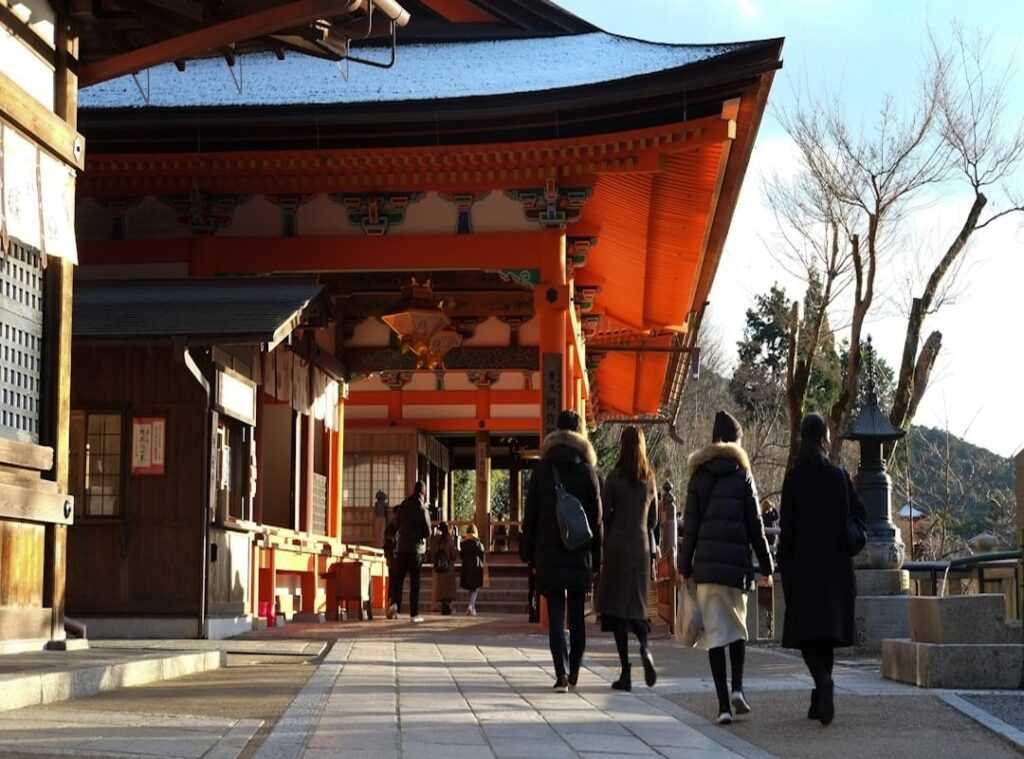
Ever feel overwhelmed by the sheer number of Kyoto temples and shrines? You’re not alone. I knew the feeling all too well during my first visit.
With over 1,600 of these sacred sites, it’s easy to get lost in the shuffle, missing out on the true essence of Kyoto. But don’t worry; I’ve been there and done that, and I’m here to share what really matters.
This isn’t just a list of places to tick off. I’ve spent hours wandering these grounds, figuring out the best times to visit and where to find those quiet corners. Imagine avoiding the usual tourist crush and actually soaking in the serenity.
What you’ll get here is a practical guide. A way to truly experience Kyoto without the usual stress.
Temple & Shrine Etiquette: Respect and Experience
Visiting the Kyoto temples and shrines is more than just sightseeing. It’s about respect. First, let’s clear up the basics: temples are Buddhist, while shrines are Shinto.
Simple, right? Now, imagine standing at a ‘temizuya’ fountain. You’ll see a ladle.
Hold it with your right hand, pour water over your left, switch hands, and repeat. Then, cup water in your left hand, sip (don’t swallow), and rinse your mouth. Easy yet key.
Walking through a torii gate? Bow slightly. It’s a mark of respect.
Remove shoes before entering the main hall. You’d hate to be that person, right? And about photography: always check the rules.
Some places are sacred, not Instagram backdrops.
This isn’t just about being polite; it’s about enhancing your journey. Curious about other travel gems? Check out the must visit beaches southeast asia.
It’s all about broadening horizons.
Kyoto’s Big Three: Secrets to Smarter Sightseeing
Kyoto can be magic. But let’s be real, nothing spoils the vibe like a mob of tourists jockeying for selfies. If you’re chasing those perfect moments at the famed Kyoto temples and shrines, you’ve got to outsmart the crowd.
First stop, Kinkaku-ji, or The Golden Pavilion. It’s like a postcard come to life, with its shimmering gold leaf. Gorgeous, yes.
But elbowing your way through to see it? Nah. Here’s the hack: show up right when it opens at 9 AM or sneak in an hour before closing.
The light’s softer, the tour buses are fewer, and honestly, it feels like you’re in a scene from a Studio Ghibli film.
Next, Fushimi Inari-taisha, known for its endless rows of red torii gates. These gates are hypnotic, a true visual feast. Most folks make it a few gates in, snap their shots, and head back.
That’s where you win. Walk 20 to 30 minutes up the path. Suddenly, you’re almost alone.
It’s surreal how quickly the crowd thins out. And those photos? Perfectly Instagrammable, minus the photobombers.
Now, Kiyomizu-dera Temple. Perched on a hill, it offers a sweeping view of the city from its famous wooden stage. During the day, it’s lively and bustling, sure.
But the real magic happens during evening illuminations in spring and fall. Trust me, the blend of soft lights and fewer people transforms the experience. It’s like stepping into a different universe.
Now you might be wondering, are these tweaks really worth it? Absolutely. They turn a chaotic tourist trap into a personal journey.
The essence of Kyoto’s charm shines through when you aren’t distracted by the throngs.
Plus, these aren’t just tweaks; they’re game-changers. Making the effort to adjust your schedule gives you the space to breathe and appreciate Kyoto’s timeless beauty. And isn’t that what travel’s about?
Creating moments that connect long after you leave.
For more takeaways and tips on kyoto temples and shrines, remember to dig a little deeper. Sometimes the best experiences are tucked away behind the obvious.
Beyond the Crowds: Finding Your Zen in Gardens & Groves
Why do we always flock to the loudest attractions? Kyoto’s temples and shrines have their allure, but the real magic is in the quiet corners. Ever heard of the Arashiyama Bamboo Grove?

Of course you have. It’s famous, and for good reason. But here’s a travel tweak: visit before 8 AM.
The early morning light filtering through the bamboo? It’s like a scene out of a dream. Trust me, the tranquility is worth the early wake-up call.
But let’s not stop there. Tenryu-ji Temple is right next door and, surprisingly, often overlooked. Its Sogenchi Teien garden is a UNESCO site, yet people rush past it.
Why? Maybe they’re too focused on getting that perfect bamboo shot. But if you pause and explore, you’ll find a garden that’s both serene and breathtaking.
And then there’s Ginkaku-ji, the Silver Pavilion. It’s not as flashy as its golden sibling, but that’s the charm. The dry sand garden, known as the ‘Sea of Silver Sand,’ is a masterpiece of subtlety.
The moss garden, too, offers a peaceful escape. Fewer crowds mean you can actually hear your thoughts. Isn’t that why we travel?
To find a moment of peace in a chaotic world?
Speaking of travel gems, if you’re planning to explore beyond Japan, check out the charm prague old town for another destination that blends history with tranquility.
So next time you’re in Kyoto, ask yourself: do you want the chaos of crowds or the calm of a quiet garden? Choose wisely. After all, the best travel experiences aren’t always about ticking boxes.
They’re about finding those hidden spots that speak to you.
An Explorer’s Pick: The Hidden Gem You Won’t Forget
Ever stumbled upon a spot so special you almost want to keep it a secret? That’s Otagi Nenbutsu-ji Temple for me. Tucked away in Arashiyama, it’s a Kyoto temples and shrines experience like no other.
The main draw? Those 1,200 stone statues of rakan. Each one has a personality (some) smiling, some frowning, and yes, one even has glasses.
It’s like a stone version of a quirky community meeting.
Most tourists miss this place. Why? It’s a bit off the beaten path.
But isn’t that what makes it fun? You get to escape the crowds and discover something truly unique. Let everyone else cram into the famous spots.
You and I know better, don’t we?
Getting there is easy. Take a short taxi ride from the main Arashiyama area or enjoy a walk. It’s a perfect final stop after wandering through the bamboo grove.
Trust me, this path is rewarding. Plus, it’s not every day you get to see stone statues with such character.
Pro tip: Visit in the late afternoon when the light softens and the statues seem to come alive. It’s an insider tip worth sharing (or) keeping to yourself.
Plan Your Kyoto Journey
Kyoto’s got a ridiculous number of temples, doesn’t it? It’s both the charm and the challenge. I get it.
The crowds can be a nightmare, turning what should be a spiritual escape into an overwhelming hustle. But hey, relax. With a smart, curated approach, you can savor both the iconic and the hidden gems of Kyoto temples and shrines without losing your mind.
Remember, it’s about connecting with these incredible places, not just ticking them off a list.
Feeling inspired? Great. You’ve got your temple plan ready.
Now, let’s tackle the evenings. Check out our guide to the best food in Gion. Dive into Kyoto’s culinary scene once the sun sets on those ancient walls.
Ready for a complete Kyoto adventure? Your journey starts now.

 There is a specific skill involved in explaining something clearly — one that is completely separate from actually knowing the subject. Lindane Rayawns has both. They has spent years working with destination highlights in a hands-on capacity, and an equal amount of time figuring out how to translate that experience into writing that people with different backgrounds can actually absorb and use.
Lindane tends to approach complex subjects — Destination Highlights, Tweaked Travel Gear Reviews, Packing Optimization Tricks being good examples — by starting with what the reader already knows, then building outward from there rather than dropping them in the deep end. It sounds like a small thing. In practice it makes a significant difference in whether someone finishes the article or abandons it halfway through. They is also good at knowing when to stop — a surprisingly underrated skill. Some writers bury useful information under so many caveats and qualifications that the point disappears. Lindane knows where the point is and gets there without too many detours.
The practical effect of all this is that people who read Lindane's work tend to come away actually capable of doing something with it. Not just vaguely informed — actually capable. For a writer working in destination highlights, that is probably the best possible outcome, and it's the standard Lindane holds they's own work to.
There is a specific skill involved in explaining something clearly — one that is completely separate from actually knowing the subject. Lindane Rayawns has both. They has spent years working with destination highlights in a hands-on capacity, and an equal amount of time figuring out how to translate that experience into writing that people with different backgrounds can actually absorb and use.
Lindane tends to approach complex subjects — Destination Highlights, Tweaked Travel Gear Reviews, Packing Optimization Tricks being good examples — by starting with what the reader already knows, then building outward from there rather than dropping them in the deep end. It sounds like a small thing. In practice it makes a significant difference in whether someone finishes the article or abandons it halfway through. They is also good at knowing when to stop — a surprisingly underrated skill. Some writers bury useful information under so many caveats and qualifications that the point disappears. Lindane knows where the point is and gets there without too many detours.
The practical effect of all this is that people who read Lindane's work tend to come away actually capable of doing something with it. Not just vaguely informed — actually capable. For a writer working in destination highlights, that is probably the best possible outcome, and it's the standard Lindane holds they's own work to.